
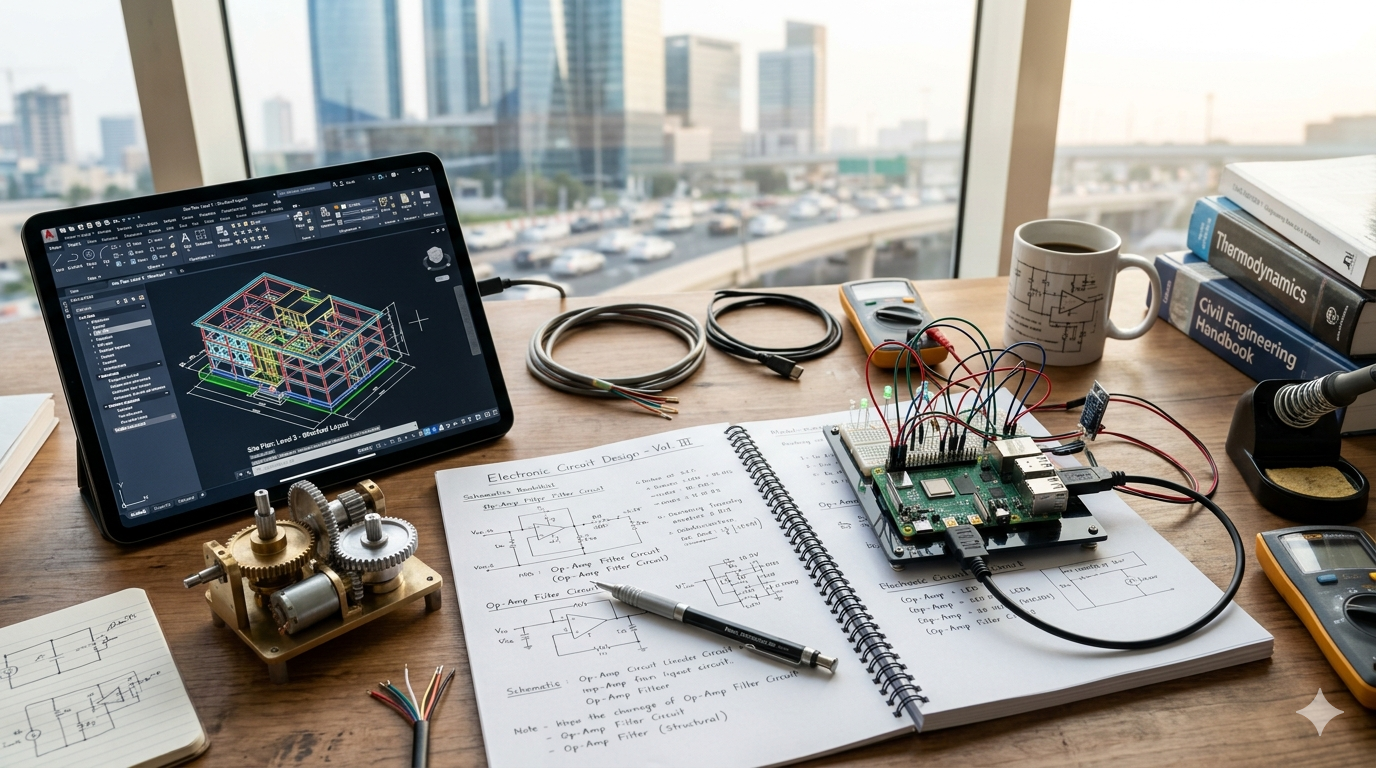
Choosing a career path after high school is one of the most significant decisions a student will ever make. For those with a penchant for logic, a love for problem-solving, and a fascination with how things work, the field of engineering is often the top contender. At the heart of this field lies a prestigious undergraduate degree that serves as the gateway to innovation. To understand this journey, we must first start with the basics: the b tech full form.
What Is the B Tech Full Form?
The b tech full form is Bachelor of Technology. It is a four-year undergraduate degree awarded by universities, institutes of technology, and deemed universities to students who successfully complete an accredited programme in engineering or applied technology. The term “Bachelor” denotes the level of the qualification — undergraduate — while “Technology” distinguishes it from a Bachelor of Engineering (B.E.) by its applied, industry-oriented curriculum design.
Why Choose a B.Tech Degree?
In an era dominated by digital transformation and rapid infrastructure development, the demand for skilled technocrats is at an all-time high. Pursuing a degree where the b tech full form represents a commitment to technical excellence offers several advantages:
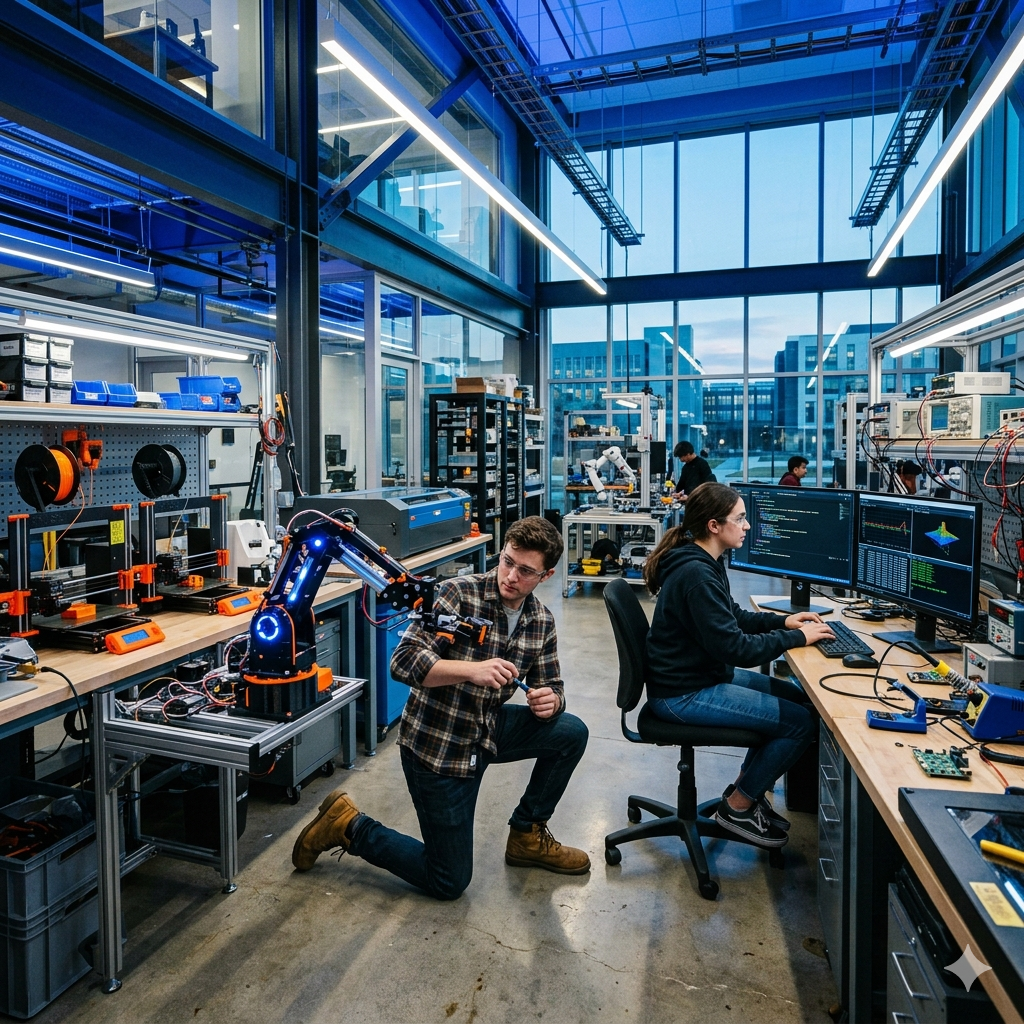
- Diverse Specializations: Engineering isn’t a monolith. Whether you are interested in the invisible code that runs our world or the massive bridges that span our rivers, there is a niche for you.
- High Employability: Technical roles are consistently among the highest-paying and most stable jobs globally.
- Innovation at the Core: This degree teaches you not just to use technology, but to create it. It encourages an entrepreneurial mindset and critical thinking.
Popular Specializations in B.Tech
When you enroll in a program under the b tech full form, you aren’t just “studying engineering.” You are choosing a specific lens through which to view the world. Here are some of the most sought-after branches:
1. Computer Science and Engineering (CSE)
This is arguably the most popular branch in the modern era. It covers software development, artificial intelligence, machine learning, and cybersecurity. It is the engine driving the Fourth Industrial Revolution.
2. Mechanical Engineering
Often called the “evergreen” branch, mechanical engineering deals with the design, analysis, and manufacturing of mechanical systems. From automotive engines to robotics and aerospace, the scope is vast.
3. Civil Engineering
If you are fascinated by the built environment—skyscrapers, dams, and transportation networks—civil engineering is the path. It combines physics and design to create sustainable infrastructure.
4. Electronics and Communication Engineering (ECE)
This branch focuses on electronic devices and communication networks. It’s the bridge between hardware and the signals that allow us to communicate wirelessly across the globe.
The Curriculum and Learning Approach
The four-year journey of a Bachelor of Technology is structured to transform a student into a professional. While the b tech full form sounds academic, the curriculum is designed to be highly interactive.
- Foundation Years (Year 1 & 2): Students typically study core sciences—Mathematics, Physics, and Chemistry—alongside introductory engineering courses to build a strong base.
- Specialization Years (Year 3 & 4): This is where students dive deep into their chosen subjects. Labs, workshops, and seminars become the primary mode of learning.
- The Capstone Project: In the final year, students must complete a major project. This is a culmination of their four years of study, often involving the creation of a working prototype or a detailed research paper.
Eligibility and Admission Process
To pursue a degree with the b tech full form, students usually need to meet specific criteria. In most regions, particularly in India, the requirements include:
- Educational Background: Completion of 10+2 (High School) with Physics, Chemistry, and Mathematics (PCM) as core subjects.
- Entrance Exams: Admission to premier institutes like the IITs or NITs requires clearing highly competitive exams such as JEE Main and JEE Advanced. Other regions may use SAT scores or specific state-level entrance tests.
- Minimum Percentage: Most universities require a minimum aggregate (usually 50-60%) in the qualifying board exams.
B.Tech vs. B.E.: Is There a Difference?
A common point of confusion for students is the difference between Bachelor of Engineering (B.E.) and the b tech full form (Bachelor of Technology).
| Feature | Bachelor of Engineering (B.E.) | Bachelor of Technology (B.Tech) |
| Focus | Primarily Theoretical & Knowledge-based | Primarily Practical & Skill-based |
| Approach | Deals with the “Why” of engineering | Deals with the “How” of technology |
| Curriculum | More focus on fundamental concepts | Frequently updated to match industry trends |
| Suitability | Ideal for research and academia | Ideal for industrial roles and technical jobs |
In reality, the job market treats both degrees almost identically. What matters most is the reputation of the institute and the individual skill set of the graduate.
Career Opportunities and Salary Prospects
Graduating with a degree defined by the b tech full form opens doors to a plethora of career paths. Engineering graduates are not limited to technical roles; their analytical skills are highly valued in consultancy, finance, and management as well.
- Software Engineer: Designing and maintaining complex software systems.
- Data Scientist: Analyzing large datasets to drive business decisions.
- Project Manager: Overseeing large-scale engineering projects from conception to completion.
- Research & Development (R&D): Working in labs to innovate new materials or technologies.

In terms of compensation, engineering remains one of the most lucrative fields. Entry-level salaries vary significantly based on the branch and the institution, but the growth trajectory is typically steep, especially for those who keep their skills updated with the latest technological trends.
The Future of Engineering
As we look toward the future, the b tech full form will continue to evolve. We are moving toward a multidisciplinary approach where the boundaries between branches are blurring. A mechanical engineer today might need to know coding for robotics, while a computer scientist might need to understand the physics of quantum computing.
Sustainability is also becoming a core component of engineering education. The engineers of tomorrow will be tasked with solving the climate crisis, creating renewable energy solutions, and building “smart” cities that are efficient and eco-friendly.
Frequently Asked Questions
What is the full form of B Tech?
B Tech full form is Bachelor of Technology, an undergraduate degree in engineering and technology.
What does b tech full form represent academically?
B Tech full form refers to a four‑year professional degree focused on engineering principles and practical technological applications.
Is b tech full form different from B.E.?
B Tech full form is Bachelor of Technology, while B.E. stands for Bachelor of Engineering; both are similar but may differ slightly in curriculum focus.
What are the common branches under b tech full form?
Branches under b tech full form include Computer Science, Mechanical, Civil, Electrical, Electronics, and newer fields like AI and Data Science.
How long is the b tech full form course?
The b tech full form course typically lasts four years, divided into eight semesters with exams, labs, and projects.
Who can apply for a program based on b tech full form?
Students who have passed 10+2 with science subjects and meet entrance exam criteria can apply for a degree linked to b tech full form.
Conclusion
The b tech full form, Bachelor of Technology, represents more than just an academic credential. It symbolizes a journey of curiosity, rigorous training, and the acquisition of skills that can literally change the world. Whether you dream of launching rockets, developing life-saving medical devices, or building the next great social media platform, a B.Tech degree provides the foundation you need to turn those dreams into reality.
If you have a passion for innovation and a drive to solve the complex problems of the 21st century, the path of a B.Tech graduate is waiting for you. It is a challenging road, but the rewards—both personal and professional—are unparalleled.